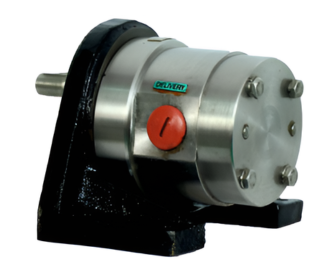
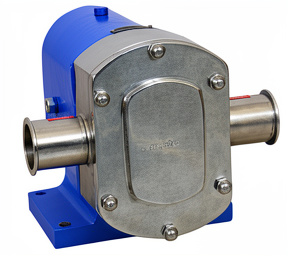
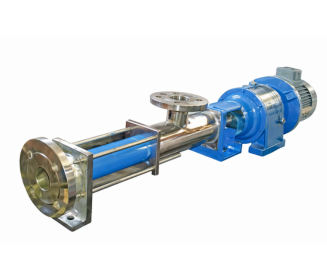
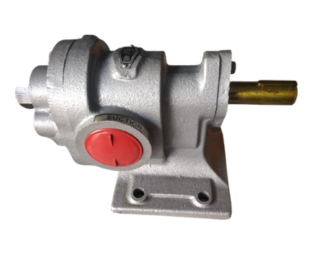
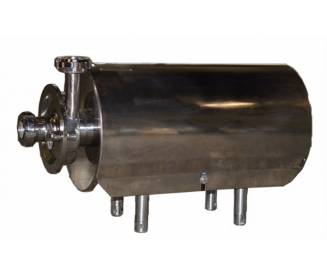
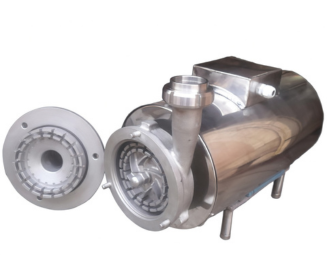
Rotary lobe pumps are hygienic positive displacement pumps designed to transfer low, high, and variable viscosity fluids with a smooth, low-shear pumping action. They are widely used in food processing, dairy, pharmaceutical, cosmetics, biotechnology, and chemical industries because they maintain product quality while supporting CIP and SIP cleaning systems. This guide explains how rotary lobe pumps work, where they are used, how they compare with centrifugal pumps, and the key factors to consider before selecting the right pump.
Rotary Lobe Pumps: The Complete Guide to Working Principle, Applications & Selection
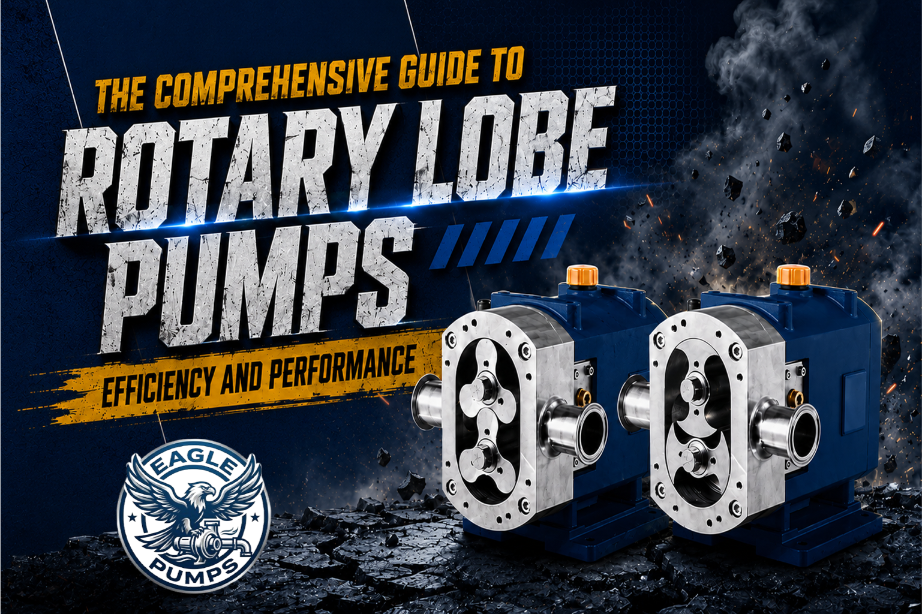
Modern manufacturing depends on pumping systems that deliver consistent performance without compromising hygiene, product quality, or operational efficiency. Rotary lobe pumps have become a trusted solution for handling sensitive, viscous, and shear-sensitive fluids across a wide range of industrial processes.
If you're researching industrial Rotary Lobe Pumps, comparing technical specifications, hygienic designs, and performance capabilities is an important first step before selecting the right pumping solution for your application.
Unlike conventional pumping technologies, rotary lobe pumps use a positive displacement design that delivers smooth, accurate, and controlled fluid transfer. This makes them suitable for applications where maintaining product integrity is just as important as maintaining production efficiency.
Whether you're an engineer, plant manager, maintenance professional, or procurement specialist, this guide provides a practical understanding of rotary lobe pump technology. You'll learn how these pumps work, where they perform best, how they compare with centrifugal pumps, and the key considerations for selecting the right pump for your process.
On This Page
In this guide, you'll discover:
- What rotary lobe pumps are and why they are classified as positive displacement pumps.
- How the working principle of a rotary lobe pump ensures smooth, low-shear fluid transfer.
- The industries and applications where rotary lobe pumps deliver the best performance.
- The differences between rotary lobe pumps and centrifugal pumps.
- The key factors to consider when selecting the right rotary lobe pump for your application.
What Are Rotary Lobe Pumps? Understanding Positive Displacement Pump Technology
Rotary lobe pumps are a type of positive displacement pump designed to transfer liquids by moving a fixed volume of fluid with every rotation. Unlike pumps that rely on centrifugal force, they provide a smooth, controlled flow while maintaining product quality.
Their hygienic construction and low-shear pumping action make them suitable for processing sensitive, viscous, and particle-containing fluids. This is why they are widely used across food, dairy, pharmaceutical, cosmetic, biotechnology, and chemical industries.
Understanding the Working Principle of a Rotary Lobe Pump
A rotary lobe pump operates using two synchronized lobes that rotate in opposite directions inside the pump casing. As the lobes turn, sealed cavities are formed, allowing fluid to move continuously from the inlet to the outlet.
Because the lobes never come into direct contact with each other, internal wear is reduced while maintaining accurate and reliable fluid transfer. This design also helps preserve the consistency of delicate products during pumping.
Why Rotary Lobe Pumps Are Known as Positive Displacement Pumps
Unlike centrifugal pumps that depend on velocity to move liquid, rotary lobe pumps transfer a fixed amount of fluid during every revolution. This enables consistent flow even when handling highly viscous products or changing system pressures.
The positive displacement design also improves pumping accuracy while reducing product waste and unnecessary turbulence. These advantages make rotary lobe pumps a dependable solution for applications that demand controlled and repeatable performance.
Why Industries Choose Rotary Lobe Pumps for Hygienic Processing
Modern manufacturing facilities require pumps that can meet strict hygiene standards while operating efficiently in demanding production environments. Rotary lobe pumps support Clean-in-Place (CIP) and Sterilize-in-Place (SIP) systems, helping manufacturers maintain cleanliness with minimal downtime.
Although the pumping principle is the same, the industries, products, and production processes can vary significantly. If you'd like to explore what rotary lobe pumps are used for, our detailed guide explains the industries, applications, and process requirements where this pumping technology performs best.
How Do Rotary Lobe Pumps Work? Understanding Their Operating Principle
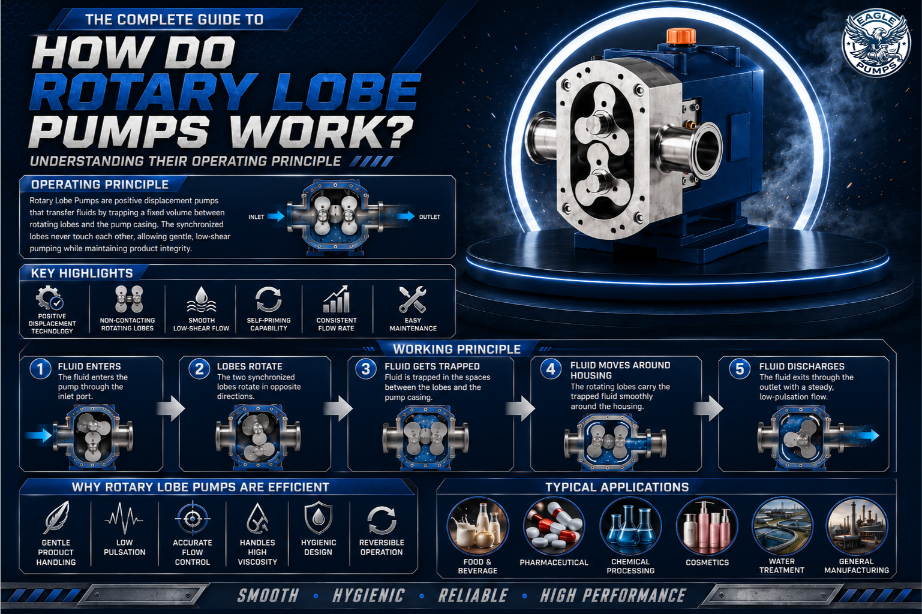
The working principle of a rotary lobe pump is based on positive displacement, where a fixed volume of fluid is transferred during every rotor rotation. This creates a smooth, continuous flow while protecting delicate products from excessive shear or turbulence.
Unlike pumps that rely on high fluid velocity, rotary lobe pumps maintain consistent flow across different viscosities and operating conditions. This makes them suitable for hygienic and industrial processes where product quality and process stability are equally important.
The Role of Rotors in Fluid Transfer
Inside the pump, two synchronized lobes rotate in opposite directions without making contact with each other. As they rotate, sealed cavities are formed that gently carry the product from the suction side to the discharge outlet.
This non-contact design minimizes internal wear while maintaining a reliable pumping action. It also helps preserve the texture, consistency, and quality of sensitive fluids throughout the transfer process.
How Positive Displacement Creates Consistent Flow
Every revolution of the rotors moves a fixed quantity of liquid through the pump chamber. This allows rotary lobe pumps to maintain accurate flow rates, even when handling highly viscous products or changes in system pressure.
The controlled pumping action reduces pulsation, minimizes product waste, and improves process consistency. These advantages make rotary lobe pumps a dependable choice for applications requiring predictable and repeatable performance.
Why the Operating Principle Improves Pump Performance
The combination of low internal velocity, gentle product handling, and hygienic construction helps rotary lobe pumps deliver long-term performance with minimal maintenance. Their compatibility with Clean-in-Place (CIP) and Sterilize-in-Place (SIP) systems also supports efficient cleaning without frequent equipment disassembly.
By reducing product degradation and mechanical wear, rotary lobe pumps help manufacturers improve operational efficiency while extending equipment life. These performance advantages are one of the main reasons they are widely adopted across hygienic and industrial processing applications.
Why Rotary Lobe Pumps Are Preferred Across Modern Industries
Different industries have different pumping challenges, but many share the same priorities—protecting product quality, maintaining hygienic standards, and ensuring reliable production. Rotary lobe pumps meet these requirements by delivering gentle, consistent fluid transfer across a wide range of operating conditions.
Their ability to handle both low and high-viscosity products with minimal shear has made them a trusted solution in hygienic processing as well as demanding industrial environments. This versatility is one of the key reasons rotary lobe pumps continue to be widely adopted worldwide.
Supporting Hygienic Food, Dairy & Beverage Production
Food and beverage manufacturers require pumping systems that preserve product texture while meeting strict hygiene standards. Rotary lobe pumps are commonly selected because they support CIP and SIP cleaning processes while handling products gently throughout production.
Their low-shear pumping action helps reduce product degradation during the transfer of dairy products, sauces, syrups, fruit preparations, beverages, and other sensitive food ingredients. This contributes to consistent product quality and efficient manufacturing operations.
Meeting the Demands of Pharmaceutical & Chemical Processing
Pharmaceutical and chemical applications often require accurate fluid handling with minimal contamination risk. Rotary lobe pumps provide smooth and controlled flow, making them suitable for transferring liquid medicines, creams, gels, cosmetic formulations, chemicals, and specialty process fluids.
Their sanitary construction and dependable operation also help manufacturers meet strict quality standards while reducing maintenance requirements in continuous production environments.
Selecting the Right Pump for Different Industrial Applications
Every production process has unique requirements based on fluid viscosity, operating pressure, hygiene standards, and system design. Understanding these factors is essential before selecting a rotary lobe pump for any industrial application.
If you're looking for industry-specific examples and want to understand what rotary lobe pumps are used for, explore our dedicated guide covering common applications, product types, and pump selection considerations across different industries.
Rotary Lobe Pumps vs Centrifugal Pumps: Which Pump Is Right for Your Application?
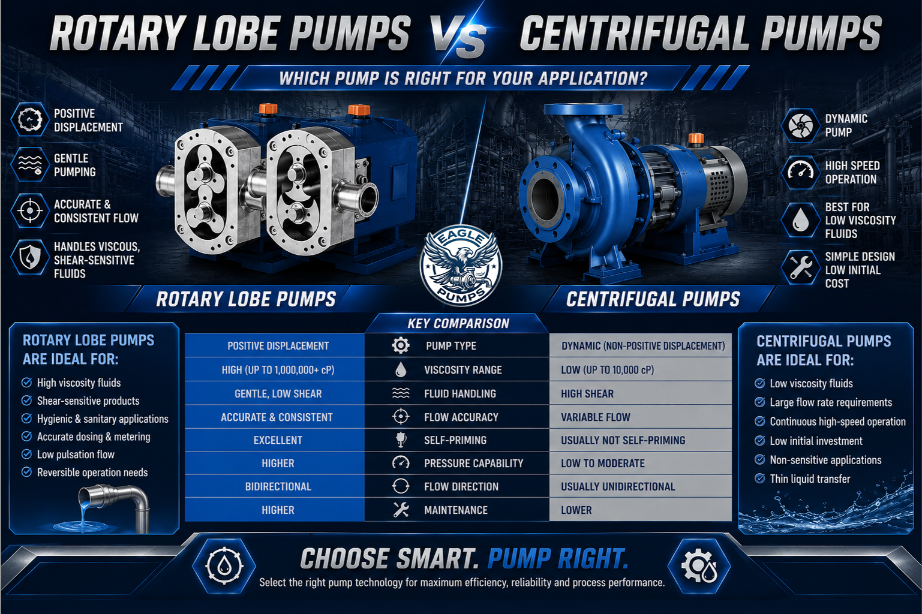
Choosing between a rotary lobe pump and a centrifugal pump depends on the type of fluid being transferred and the requirements of your production process. While both technologies move liquids efficiently, they are designed to solve different pumping challenges.
Understanding these differences helps engineers, plant managers, and procurement teams select equipment that improves product quality, reduces maintenance, and supports long-term operational efficiency.
When Rotary Lobe Pumps Are the Better Choice
Rotary lobe pumps perform best when handling viscous, shear-sensitive, or particle-containing products that require gentle and consistent fluid transfer. Their positive displacement design maintains accurate flow while protecting delicate products from excessive agitation.
They are widely selected for hygienic industries where maintaining product integrity is essential. This makes them suitable for processing dairy products, pharmaceutical formulations, cosmetic creams, sauces, syrups, and other sensitive process fluids.
When Centrifugal Pumps Offer Better Performance
Centrifugal pumps are generally better suited for low-viscosity liquids that require high flow rates and continuous circulation. Their simple operating principle makes them an efficient solution for transferring water, cleaning solutions, and other thin fluids.
Although they perform well in these applications, centrifugal pumps are typically less effective when handling highly viscous or shear-sensitive products. In these situations, a positive displacement pump often delivers more reliable process performance.
Choosing the Right Pump for Long-Term Reliability
The right pump depends on more than flow rate alone. Factors such as product viscosity, operating pressure, hygiene requirements, cleaning methods, and production capacity all influence long-term performance and maintenance costs.
If you're comparing both technologies in detail, our guide on rotary lobe pumps vs centrifugal pumps explains their working principles, advantages, limitations, and ideal industrial applications to help you make an informed decision.
How to Choose the Right Rotary Lobe Pump for Your Industrial Application
Selecting the right rotary lobe pump is about more than comparing flow rates or connection sizes. The ideal pump should match your process conditions, product characteristics, and long-term production goals to ensure reliable performance and efficient operation.
Understanding the key selection factors before purchasing helps reduce maintenance costs, improve product quality, and ensure your pumping system performs consistently as production demands grow.
Evaluate Your Process & Product Requirements
Every production process is different, which is why understanding the characteristics of the fluid being transferred is the first step in selecting a rotary lobe pump. Factors such as viscosity, temperature, solids content, and hygiene requirements all influence the pump configuration that will deliver the best performance.
Taking these process conditions into account helps prevent underperforming equipment, unnecessary maintenance, and costly production interruptions. A pump matched to the application will operate more efficiently and provide greater long-term reliability.
Compare Technical Specifications That Matter
Beyond flow rate and pressure, buyers should also evaluate material construction, rotor design, shaft seals, connection sizes, and compatibility with CIP and SIP cleaning systems. These specifications directly affect pump durability, product safety, and operational efficiency.
For hygienic industries such as food processing, dairy, pharmaceuticals, and cosmetics, selecting SS316 construction and application-specific sealing arrangements helps ensure compliance with demanding production environments while reducing maintenance over time.
Select a Reliable Rotary Lobe Pump Manufacturer in India
Choosing the right manufacturer is just as important as selecting the right pump. Look for a supplier that offers application guidance, quality-tested equipment, technical support, and pumps designed to meet the requirements of your industry.
If you're comparing industrial Rotary Lobe Pumps, explore our complete product range to review technical specifications, available models, and hygienic pumping solutions designed for food, dairy, pharmaceutical, cosmetic, and chemical processing applications.
Why Rotary Lobe Pumps Continue to Be the Preferred Choice Across Industries
Rotary lobe pumps have become one of the most dependable positive displacement pumping solutions for industries that require hygienic operation, gentle product handling, and consistent process performance. Their ability to transfer everything from low-viscosity liquids to highly viscous, shear-sensitive products makes them a reliable choice across modern manufacturing environments.
Whether you're upgrading an existing production line or selecting a pump for a new process, understanding the working principle, application requirements, and key selection criteria helps you make a more informed investment. If you're ready to compare industrial Rotary Lobe Pumps, explore Eagle Pumps' complete range to find a solution engineered for reliable performance, hygienic processing, and long-term operational efficiency.
Ready to Select the Right Pump?
Our engineers can help you choose the correct rotary lobe pump model based on your fluid, flow, pressure, and hygiene requirements.
View EP Series